Showing posts with label AA2. Show all posts

Thursday, 20 November 2008

AA2 - sound design project - game audio


Rocks'N'Diamonds - Game Audio.


RocksNDiamonds (RnD) is an emulation of a 1980's aesthetic. It is an amalgamation of several games rolled into one. I have reworked one of the tutorial levels. The level itself has been slightly modified to make game play much easier, otherwise certain areas of the map and therefore sonic environments would be time consuming and prone to inadvertent player death.

Sound creation aesthetics was governed by a high quality lo-fi sound approach. Using the "Analogue" instrument in Ableton Live 7 for a majority of sounds gave ease to such an approach, with simple oscillator sounds with the use of automation to shape them, and a host of integrated effects (such as reverb and bit rate reduction) for on the spot creation.

Some sounds which I felt needed a richer tonality (such as the player digging, where I integrated a real world mentality to sound creation), the use of foley was needed. Generally putting a sound snippet into the Live "sampler" plug-in and making use of integrated settings, automation and other available plug-ins.

- edited version of Process.doc

Associated production files here :
http://www.box.net/shared/l5fgvi6f30


references

Haines, Christian. 2008. AA2 - Sound Design Project - Game Audio.pdf

Saturday, 25 October 2008

aa2 - week 11 - game music


Creating game music was quite fun. The main challenge was to ensure repetition maintained interest (although this is relative to the amount of time one does spend on the same level !!).

I created two seperate tracks, one fast and one slow for comparitive consideration. Both work reasonable well on the level I tested with - although individual instrument levels could be slightly modified for transparency of game sounds.

Other thoughts ; the music shipped with the game is incredibly lo-fi (8 bit, 22kHz mono), and while I added various forms of retro techniques the new sounds are a bit nice. Whether this will matter to someone with no relative distinction is a potential question. I'm thinking that using low bit rate contemporary style music compression (ie mp3) may add an interesting sheen but this will be explored later (the mp3 as linked at 128kbps may be appropriate).

Upon reconsideration of the task set, I tried to extend the slow piece beyond a 9 second loop but found it purposeless. Because of the shortness I have included the two tracks, each with 2 loopings.

zip file at;

http://www.box.net/shared/l119of271i


REFERENCES

Haines, Christian. 2008. AA2 - Week 11 - Game Audio Design - Music - Planner.pdf


Hannigan, James. 2004, "Changing Our Tune", 2007,
(http://www.jameshannigan.co.uk/changing.htm).


"Chapter 7 - Ideal Production". Brandon, Alexander. 2005, Audio for games: planning,
process, and production, New Riders Games, Berkeley, Calif.


Pp149 - 152. Childs, G. W. 2006, Creating Music and Sound for Games, Thomson
Course Technology.


pp246 - 252. Irish, Dan. 2005, The Game Producer's Handbook, Course Technology
PTR.

Sunday, 19 October 2008

aa2 - week 10 - game audio design - ambience


This week's assignment relates to creating in game ambience.

Again sequencing in Ableton Live and setting up the Analog synthesiser with some slight automation to create a spooky windy castle setting, and a deserted computer room with plaintive alarm signal.

This weeks challenge was to make sure they were loopable, which meant going back into Live and adjusting one of the LFO's on the computer room.

The pieces have both been normalised to -1 dB, but both would play back at significantly lower than other sounds. They may also require some equalisation/compression but I feel they need proper contextualising before finalising these.

This final mixdown features one loop of each piece. Computer room at about 12 seconds and the windyness about 20 seconds.

link to files
http://www.box.net/shared/nh0e5c6pto


references____

Haines, Christian. 2008. AA2 - Week 10 - Game Audio Design - Ambience - Presentation.pdf

Bernstein, Daniel. 1997, Creating an Interactive Audio Environment, Gamasutra, 2006,
(http://www.gamasutra.com/features/19971114/bernstein_01.htm). (Available Online)

Sonnenschein, David. 2001, Sound design: the expressive power
of music, voice, and sound effects in cinema. pp173-174, 182-189. Michael Wiese Productions. Seattle, Washington.


__________________________________________________________________

Sunday, 12 October 2008

AA2 - week 09 - game audio design assets


I created these four sounds in Ableton Live using the in-program synthesisers. Shaping the internal synth envelopes, mixer envelopes and using equalisation and bit/sample rate reduction.
Die features a sequence of notes, whereas the others are single notes.


I went in with the idea of making reasonably high fidelity sounding assets, but found myself with fairly dirty(ish) sounds. Perhaps more in tune with my subconscious aesthetic of the game.

The sounds are ; acid_drip (acid dripping), die (player dying), nut_break (breaking a nut), nut_push (pushing a nut).


zip of sound file and asset list :
http://www.box.net/shared/a0mfrn9akg


references

Haines, Christian. AA2 - Week 9 - Game Audio Design - Assets - Planner.pdf

"Chapter 5 - Sound Design: Basic Tools and Techniques" and "Chapter 6 - Advanced
Tools and Techniques". Childs, G. W. 2006, Creating Music and Sound for Games,
Thomson Course Technology.

Kelleghan, Fiona. 1996, Sound Effects in SF and Horror Films, 2006,
(http://www.lysator.liu.se/lsff/confuse96/Sound_Effects_in_SF_and_Horror_Films.html).

Sunday, 5 October 2008

aa2 - week 08 - Rocks'n'Diamonds game audio


Rocks'n'Diamonds is a game styllistically based on the 1984 personal computer game Boulderdash.

To complete this project I will have to create about 36 sounds. Including background music, level completed (Hall of Fame), and play action sounds.

Given the era of Boulderdash, the sound Fx for Rocks'n'Diamonds are based on the aesthetic of 1980 computing. The original music with the game were excerpts from music from the period (Tangerine Dream, Propaganda, Alan Parsons Project) and were very low sound quality samples (8 bit 8kHz mono). The current version has these excerpts at a much higher 22khz.

The game action sound features play driven sounds (digging, collecting treasure...) and feature sounds (creatures, dripping...). These sounds are all generally short (generally less than 200 ms). With the repeated sounds (eg monsters), I would like to experiment with longer loops which will give more variety rather than rapidly repeated clicks.

With the obvious visual styling of the game I will keep with the simple sounds reminiscent of 1980's computing. As such I imagine I will use analogue style synthesis, a bit of foley, and low quality samples. In light of the advance in computing power since the game inception, I will not be so concerned with keeping the sounds small but will be able to focus more on higher quality settings with a retro sound.

The game engine does feature the ability to play .mod files. Unfortunately these are not accurately represented on my Windows system so I will not be using this format.

Pre-production form is at:
http://www.box.net/shared/hoqrm8s4jq


references__
Haines, Christian. 2008. AA2 - Sound Design Project - Game Audio.pdf

2008. Rocks'n'Diamonds news.
http://www.artsoft.org/rocksndiamonds/ (viewed 060october 2008)

Saturday, 4 October 2008

aa2 - week 07 - game audio aesthetics

I did the voice over's for this weeks project.

Basically a wee tiny bit of script writing, recording the voices, processing (major eq, compression) running it with the video, editing the audio to fit as I imagined it(time compression and cutting). then shipping it off to Freddy.

As I was only responsible for one small section. The finished product was a reasonable surprise. With the final placement of the voice's I could have left my original audio as it was. I feel that there is a major gap in plot development after the voice over's but this was not my area :)
I guess I could have shipped either the longer version, or both versions, but this did not occur to me.

I imagine that if this were not done during holidays, and were done with cash flow then there would have been better communication ( I spent a lot of time away ), and more interaction with the final flow of events.


Here is the finished product as it appears on Freddies blog.
http://lninio001001.blogspot.com/2008/09/aa2-game-sound-week-7_30.html


references
Haines, Christian. 2008. AA2 - Week 7 - Game Audio Aesthetics - Planner.pdf

Saturday, 30 August 2008

aa2 - week 05 - fmod designer

It is a tad disconcerting at first using something that doesnt quite behave as it looks ie an audio editor like audacity. And auditioning, where the file playpack position has nothing to do with where the cursor bar is, it takes a slight paradigm shift.

Apart from that, taking several hours to create a multi-channel audio file was the only annoyance.

The basic ideas behind FMOD are nothing new, they seem a new setting for automated envelopes really. I look forward to attempt some serious use of this as other manifestations of automated envelopes can be a bit annoying, and this has nice curve shaping :)

Oh, and there is a typo on page 126, that says to put the reverb setting at 0 (for point 4 on the SimDistance), with the picture that shows value 1. I used value 1.


zip with FMOD file and multichannel audio file are...http://www.box.net/shared/aqvnrc8dx9

Haines, Christian. 2008. AA2 - Week 5 - Audio Engine Overview - Planner.pdf

pp 113 - 132. "Chapter 5 - Tutorial Projects". Creative 2007, FMOD DESIGNER:
USER MANUAL, Creative Labs, 2007, (http://www.fmod.org/index.php/download)

Monday, 25 August 2008

aa2 - week 04 - game engine overview


Grand Theft Auto III: Vice City (GTA III) uses the Renderware game engine.


Renderware is highly customisable with ease of transition between middleware options, hence it is difficult to determine exactly what middleware may have been used in any manifestation.

GTA III does use the Miles Sound System for audio, with extensability through Creative EAX HD.

Whilst the engine itself is compatible with numerous machine/OS (Microsoft Windows, Gamecube, Wii, Xbox, Xbox 360, PlayStation 2, PlayStation 3, PlayStation Portable) GTA III appears on the PlayStation, Xbox, and Windows PC's.


The audio of the game is spatially realistic, with noises happening in appropriate locations and movement portrayed with doppler effect and volume transitions. Pedestrian voice overs are abnormally loud and constant considering the speed you drive past but this is obviously a programming choice, and there are occasional glitches where sounds drop out whilst moving spatially.


REFERENCES

RenderWare. 2008.
http://en.wikipedia.org/wiki/RenderWare (viewed 22/08/08)


The Miles Sound System,
http://www.radgametools.com/miles.htm
(viewed 22/08/08)


Monday, 18 August 2008

aa2 - week 03 - process and planning


Grand Theft Auto III - Vice City.

Please excuse poor quality of video, I havent quite worked out how to capture good quality gaming video but it does feature the sounds as listed below.

Perusing the folder of "audio" in the GTA install folder gives mainly voice samples from the game - storylines and general asides from people. Also ambience in 9-11 minute blocks (eg. beach, city).
The files vary in quality from 112kbps 32kHz mp3 to 128kbps 32kHz mp3, and also occasional wav format of short sounds.

background noises -
quiet city hubub
quiet background ocean
police radio - eg "suspect on foot"
enviroment being interacted with eg. cars hitting poles

guns-
bullets hitting car
bullets whizzing by
bullets hitting person
shells hitting ground

cars -
engine starting
engine noises - stationary and passing
car doors - open and close
police sirens
horns
cars interacting with enviroment - eg trying to drive through poles

helicopter -
flying above

game noises -
mission started sound

people -
player footsteps
pedestrian voices - including scream


References
Haines, Christian. 2008. AA2 - Week 3 - Planning and Process - Planner.


Lampert, Mark. 2006, IT’S QUIET … ALMOST TOO QUIET, Bethesda Softworks, 2006,
.

"Chapter 2 - Sound Database". Childs, G. W. 2006, Creating Music and Sound for
Games, Thomson Course Technology.

pp 2 – 24. "Chapter 1 - A Development Process Map of Game-Audio Implementation".

Brandon, Alexander. 2005, Audio for games: planning, process, and production, New
Riders Games, Berkeley, Calif.

Saturday, 9 August 2008

AA2 - week 02 - game audio analysis


Quake 3. Quake 3 Arena.

First person shooter with single and multiplayer modes, released in 1999.

Features startup logo for ID software.

Also cinematics for single player mode;
intro movie - stylised action with tune from soundtrack and appropriate play noises.
level movies - voice over introducing bots from each level, hyperreal sounds and ominous pads.

Soundtrack from two bands, front line assembly and sonic mayhem (game musician Sascha Dikiciyan) . Featuring particular tracks for each level play, also track for battle won/lost.

There are family sounds for characters (eg different footsteps shared between some character models), also unique sounds for some characters (EG orb jump).

Weapons have different sounds, but all seem to have similar hit sound.


There are two sorts of sound in gameplay.
Diegetic sounds - characters moving/shooting/being shot and from the map features eg teleportals, jump pads and scenery eg fires.
Non-diegetic sounds can be equated with narration/refereeing which give the game the feel of performing in an arena. eg voice overs giving current stats. And sounds associated with gameplay events eg dropping the flag.


The game engine features stereo spatialisation and doppler effect, and a possible 96 channels of audio (22kHz).


REFERENCES_

McGuire, Thomas. 2001. "Creative Labs 3D Blaster GeForce 3 Ti200 review".
http://www.techspot.com/reviews/hardware/3dblaster_ti200/3dblaster-6.shtml (09 August 2008)

2007. "Sascha Dikiciyan & Cris Velasco". http://www.hellgatelondon.de/szene/musik/sascha_cris_zwei.php (09 August 2008)

Huiberts, Sander. And van Tol, Richard. "IEZA: A Framework For Game Audio."
http://www.gamasutra.com/view/feature/3509/ieza_a_framework_for_game_audio.php?page=1 (09 August 2008)


Grimshaw Mark and Schott Gareth. 2007 . "Situating Gaming as a Sonic Experience: The acoustic ecology of First-Person Shooters"
http://www.digra.org/dl/display_html?chid=http://www.digra.org/dl/db/07311.06195.pdf (09 August 2008)


Friday, 1 August 2008

AA2 _ week 01_ancient game sound

<
Levels 1 - 5 on the Apple II

For a pre 1987 gameI have chosen Lode Runner, a 1983 platform game which I played as an Apple II game.

For this review I have sourced one video of gameplay from the Apple II, one video on C64, the windows DOS game modified for slower game speed, and the MAME version (arcade version emulation).

The general plot of the game is to collect boxes of gold, while avoiding enemies (by running and digging holes) and climbing along ladders and platforms. Upon collection of all the boxes the player then escapes by gaining the top of the screen.

The sounds are all synthesised, and of varying quality. The DOS version is the worst quality, then the Apple, then the C64 and MAME version being similar in quality.

All FX are based on the current action of the player (eg falling, digging) or by the actions of the player (enemy falls in dug hole). This implies limiting simultaneous sounds due to processing limitations - there are moments of simultaneous sound eg when an enemy falls in a hole during other player actions and the sounds are not clear (some sort of battle for supremacy happens).

There is general concurrence between the versions in sound types for various actions however they are all very different. The notable differences in sound versions include the C64 having a short melodic progression upon collection of all boxes (vs. a short tone for the Apple) and lacking a sound for enemies falling in a pit. The MAME version has a timer on the levels, and a warning tone begins sounding near the end of time.

As far as music goes -
MAME features non-stop background music, at least 2 music voices plus FX sounds plus timer. C64 video feaures a brief monphonic musical fanfare with the title screen. No musical content in the MS-DOS version nor on the Apple video.


References
Haines, Christain. 2008. 1. Introduction To Game Audio - AA2 - Game Audio - Planner.pdf

McDonald, Glenn. 2002, A brief timeline of Video Game Music, 2007,
.
Video game music, 2007, 2007, .

Summers, Jason. "Welcome to Jason's Lode Runner Archive."
http://entropymine.com/jason/lr/. (1 August 2008).

"Loder Runner."
http://en.wikipedia.org/wiki/Lode_Runner. (1 August 2008).

dsby. "Lode Runner on the Apple II (Levels 1-5)."
http://www.youtube.com/watch?v=X7JY5nEOUGA. (1 August 2008).

DerSchmu. "C64 Gamevideo - Lode Runner Part 1/3."
http://www.youtube.com/watch?v=iC4kT8nWQdg. (1 August 2008).

"MAME roms, L." ROMNation.NET.
http://www.romnation.net/srv/roms/mame/l.html. (1 August 2008).

Sunday, 18 May 2008

aa2 - week 09 - mixing 02


This week I've mixed down sections of a recording I did last year of Tristan Louth-Robins.

It features numerous guitar tracks, vocals, backing vocals and melodica.

I've pretty much maintained eq settings on instruments, just varied levels and effects between mixes.

I'm quite enjoying the fairly dry vocal sounds, and the varying levels of backing vocals and melodica.
That said I think mix01 works the least with the vocals being too forward and dry.
And mix03 is my favourite with much a much wetter mix than the other two.

http://ed.growerscollective.com/uni/aa2/week09/edwarKelly_Tmix01.mp3

http://ed.growerscollective.com/uni/aa2/week09/edwarKelly_Tmix02.mp3

http://ed.growerscollective.com/uni/aa2/week09/edwarKelly_Tmix03.mp3


This weeks lesson to be learnt was what happens when you use plug-ins on one computer that aren't available on another computer :P


REFERENCES
Grice, David. 2008. “AA2 – Mixing.” Seminar presented at the University of Adelaide 13th May.

Sunday, 11 May 2008

aa2 - week 8 - mixing basics


I went into uni twice to mix down a recording session I did last year. First time the DVD case was labeled, but the DVD was blank :? Second time, I had found the correct DVD, but left it at home :(

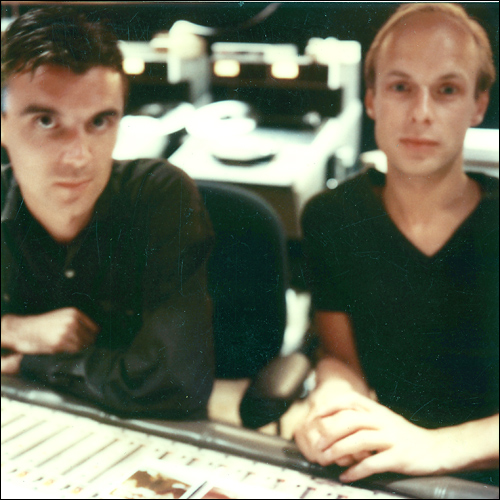
So perusing the EMU storage I found 20 .wav files which made up a track by Brian Eno and David Byrne.

I put them into ProTools, and to continue my clown action, forgot to get a snapshot of anything..

Anyway, here are three different mixes.
http://ed.growerscollective.com/uni/aa2/week08/mix%20down%2001.mp3
http://ed.growerscollective.com/uni/aa2/week08/mix%20down%2002.mp3
http://ed.growerscollective.com/uni/aa2/week08/mix%20down%2003.mp3

Some of the tracks are very noisy, with lots of hiss - enter the LPF.
And the vocal tracks are very nicely badly recorded, sounds like tape distortion and just dodgy tape action in general.
But given that they worked quite a lot together in late '70s early '80s, its quite possible that these tracks are
from those times :0

Generally used EQ to get rid of hiss and fit some sounds together, a bit of reverb, and some compression on the overall mix.


REFERENCES
Grice, David. 06 May 2008. Mxing Basics Lecture. Adelaide University.

Saturday, 3 May 2008

aa2 - week 07 - piano goodness

It's a picture of a mic technique !!

This week to record the grand piano in the EMU space we used a selection of 5 microphones,
a Neumnn u-87 and 89 as a M-S stereo pair, two Rhode NT-5's as spaced pair, and a realistic PZM.


First features the MS with a bit of the PZM thrown in . The MS was placed halfway along inside the lid with the figure 8 along the length of the strings, and the PZM was sitting on a music stand a few feet away from the end of the piano.
http://ed.growerscollective.com/uni/aa2/week07/piano_MS_pzm_01.mp3


This second example features the NT-5's and the figure 8 from the M-S pair. The NT-5's were placed about 12 feet apart on the open side pointing at the raised lid.
http://ed.growerscollective.com/uni/aa2/week07/piano_nt5_side_02.mp3


third : NT-5's but this time with the middle from the M-S, and the NT-5's were placed on either side of the players head about ear level. A lot of extraneous noises (such as fingernails clicking) but it gives a closeness that the others lacked.
http://ed.growerscollective.com/uni/aa2/week07/piano_nt5_middle_03.mp3


fourth : for this one just the NT-5's still at head level.
http://ed.growerscollective.com/uni/aa2/week07/piano_nt5_04.mp3

The last two captured a closeness that was lacking in the other mic's. It seemed that all the other recordings had more space, and sounded from a listeners perspective rather than a performers perspective.


Other comments, this is such a dynamic instrument - recording levels are very important !!


REFERENCES
Grice, David. 29 April 2008. Recording Piano Lecture. Adelaide University.

Sunday, 13 April 2008

aa2 - week 06 - recording strings

I wish I had a brown microphone.


A few problems this week.
- Found it impossible to find a string player at university that fit in with potentials :(
- Then my laptop spontaneously died ::( leaving me without some valuable resources...

So, borrowing another laptop I recorded my neighbour playing violin at home using a Rode NT3.

This first recording of a scale was done from above about 1 ft away pointi ng halfway between f-holes and the top of the body. Some eq in the form of a HPF, and a upper shelf to reduce some other noise.
http://ed.growerscollective.com/uni/aa2/week06/scale.mp3

Second the mic pointing more at the f-hole. One of those things that appeared after the recording (in "production") some nasty frequencies appeared in this one :(
Again a HPF, high shelf, and a bit of a bell at around 1150Hz.
http://ed.growerscollective.com/uni/aa2/week06/jigger.mp3

Third, much closer mic for some pizzicato style. Using the HPF and high shelf.
http://ed.growerscollective.com/uni/aa2/week06/pizzi.mp3


Observations included; annoyance at not having a soundproof recording area. Usefulness of a diversity of mic technique when working with limited resources. String players seem much harder to please (university ones that is).


REFERENCES
Grice, David. 01 April 2008. Recording Brass/Woodwind Lecture. Adelaide University.

Friday, 28 March 2008

AA2 - week 04 - recording percussion


This week I went into the studio with Freddie May, and did some recordings of Vinnie Bhagat and a selection of percussion instruments.

We used an array of 4 microphones to create two stereo setups.

A Neumann U-87 and U-89 for a middle-side setup, and two Rhode NT-5's for a stereo spread.

This first example features the two NT-5's recording a percussion tree - the two mic's were place about 7 1/2 feet up pointing down.
http://ed.growerscollective.com/uni/aa2/week04/nt5_percTree.mp3

This second example, again of the percussion tree, features all the mic's at various levels.
http://ed.growerscollective.com/uni/aa2/week04/all_percTree.mp3

And the third, the middle-side setup on a large aluminium plate gong
http://ed.growerscollective.com/uni/aa2/week04/ms_gong.mp3

___________________________________________________________________

REFERENCES
Robjohns, Hugh. Rhythm Method, recording real drums. 1999. Sound on Sound Magazine. Viewed 30 March 2008.
http://www.soundonsound.com/sos/jul99/articles/recordingdrums.htm.

Davies, Dan. Recording Latin Percussion. 2005. Sound on Sound Magazine. Viewed 30 March 2008.
http://www.soundonsound.com/sos/dec06/articles/latin.htm.

Jackson, Blair. The Big Beat. 2004. Mix on line. Viewed 30 March 2008.
http://mixguides.com/microphones/product_features/big-beat-audio-704/.

Grice, David. Recording Percussion Lecture. Adelaide University. 25 March 2008.

___________________________________________________________________

Saturday, 22 March 2008

AA2 - week 03 - recording the electric guitar

I set up the guitar with three microphones, the Shure SM57, Sennheiser MD-421, AKG C-414. These were adjusted for different takes.

First example is with the SM57 and MD-421 close to the speaker pointing across at the other side, the C-414 on hyper cardioid about 3-4' in front of the amp.
There is a mixture of each mic in this, giving quite a big pub rock sound - would be good as intro to a song. The C-414 in this case gives a good sense of depth/size to the sound.
http://ed.growerscollective.com/uni/aa2/week03/monoRockk.mp3


Second is a little doom. Mixing the SM57 and the MD-421 together giving that slightly phased metal sound, lacking in mids.
http://ed.growerscollective.com/uni/aa2/week03/powerDoomm.mp3


Third example, undistorted picked guitar, a bit indie.. in this case the 57 and 421 are pointing more directly in at the edge, and the C-414 moved out to about 6'.
I created a stereo effect with panning the 5SM7 and MD-421 slightly out, and adding a little C-414 for roominess - it seems that a little of the reverb I was playing with also slipped in on the C-414.
http://ed.growerscollective.com/uni/aa2/week03/indieStereo.mp3

There is also compression on each of the finalised mixes.


references.
White, Paul. "STRINGFEST!", Sound on Sound, viewed 22 March 2008.
http://www.soundonsound.com/sos/1996_articles/nov96/recordingguitars.html

Crisp, Pete. "nu-metal guitar tracks", MusicTech magazine, August 2004.

Monday, 17 March 2008

aa2- week 02- vocal recording

This first example highlighted a few things for me -
it was the second of my deliveries and i did so with added volume/excitement, this had the effect of making the room sound much more noticeable - especially when compressing as I did with a total gain reduction of 10dB. There is also slight side chain compression on the "f" sound which seemed a bit strong. I also noticed it was very important when editing that the initial "th" sound of the first word was represented adequately to make it sound good.
Also familiarity with the script, as I noticed a mispronounced word that wasn't picked up on the day.
http://ed.growerscollective.com/uni/aa2/week02/01EdLoud.mp3

This second example, recorded by Freddie, retains an amount of the dynamics of the delivery, but not as much as the original. This highlighted how the excitement of the actual recording could give new volume levels in the delivery.
http://ed.growerscollective.com/uni/aa2/week02/02freddieDynamic.mp3

This third example was a quieter more relaxed delivery from myself, I tried to maintain the relaxedness with a bit of evening out.
http://ed.growerscollective.com/uni/aa2/week02/03EdNotSoLoud.mp3


There is also a slight amount of eq on each, to help remove room boxiness. The above picture is of example 3.

The vocals were recorded with a Neumann U87, with a pop filter placed about 2 inches away, and the voice over person at various distances.


References
Haines, Christian. "AA2 - Planner - Week 2 - Voice Recording.pdf"

Anon. 2004, Recording Background Vocals, viewed 05/19/2006
http://www.eqmag.com/story.asp?sectioncode=41&storycode=4716.

White, Paul 1998, 20 TIPS ON.. Recording Vocals, Sound on Sound, viewed 12/1 2007,
http://www.soundonsound.com/sos/oct98/articles/20tips.html?print=yes.

White, Paul 1994, WORD UP: Recording the spoken word, Sound on Sound, viewed 12/1 2007,
http://www.soundonsound.com/sos/1994_articles/jun94/spokenword.html?print=yes.

Tuesday, 11 March 2008

aa2 - week 01 - session planning


BLACK SABBATH - original line up, going for 70's style.

4 piece band - guitar, bass guitar, drums, vocals. from past recordings their is also potential for other instruments such as harmonica.

I imagine going for a live performance/recording. So using baffles/or separate recording rooms for the acoustic isolation of instruments (guitar/bass/drums) and separate room for vocals.

Running separate headphone mixes for each performer with their preferred levels of each mic/instrument will maintain their connection as a band, with eye contact also important between members.

Overdubs will also be happening so they'll be recorded after, either for replacing takes or adding extra layers for dimension.


references :
Leadley, Simon 2004, 'Digital Etiquette - Session Documentation', Audio Technology,