Sunday, 11 May 2008

aa2 - week 8 - mixing basics


I went into uni twice to mix down a recording session I did last year. First time the DVD case was labeled, but the DVD was blank :? Second time, I had found the correct DVD, but left it at home :(

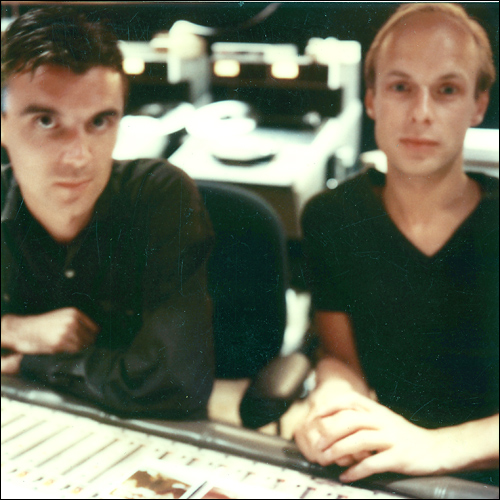
So perusing the EMU storage I found 20 .wav files which made up a track by Brian Eno and David Byrne.

I put them into ProTools, and to continue my clown action, forgot to get a snapshot of anything..

Anyway, here are three different mixes.
http://ed.growerscollective.com/uni/aa2/week08/mix%20down%2001.mp3
http://ed.growerscollective.com/uni/aa2/week08/mix%20down%2002.mp3
http://ed.growerscollective.com/uni/aa2/week08/mix%20down%2003.mp3

Some of the tracks are very noisy, with lots of hiss - enter the LPF.
And the vocal tracks are very nicely badly recorded, sounds like tape distortion and just dodgy tape action in general.
But given that they worked quite a lot together in late '70s early '80s, its quite possible that these tracks are
from those times :0

Generally used EQ to get rid of hiss and fit some sounds together, a bit of reverb, and some compression on the overall mix.


REFERENCES
Grice, David. 06 May 2008. Mxing Basics Lecture. Adelaide University.

Wednesday, 7 May 2008

mtf - week 07 - tristram carey


I was absent for this forum on the life of Tristram Carey.

His name brings back thoughts of Dr Who. Jon Pertwee (also Worzel Gummidge) and Tom Baker whom were my favourites :)

Watching recent series makes me yearn for the simple (yet rich) audio accompaniment that was the then Dr Who.

Also the "impossible piano" which features some very fine pieces of midi piano mayhem.

A shame I missed finding out more about him :(

Tuesday, 6 May 2008

cc2 - week 07 - Messaging and Analysis


Missing the lecture for last week left me pondering a bit, but I think what I've done should be more than adequate :)

I've created a 12 tone sequencer, where each tone is given a probability between 0-100 as to whether it will be played. Given that it's output is 1 - 12 that was easily associated with the notes 1 - 12, then an octave chooser was added to give a range.

I thought about adding individual choices for each of the 12 pitches but spent all my time on the other sections.

The phrase length gives a number of possible individual note durations and velocities. I had an amount of fun trying to get the multislider to change size AND remember its settings.

The lists of duration/velocities includes all 8 no matter what size the 'multislider' because it was easier !!

Patch (in text format)

http://ed.growerscollective.com/uni/cc2/week07/edwardKelly_week07_12step.txt

REFERENCES

Haines, Christian. 2008. CC2 - Week 7 - Messaging and Analysis - Planner.pdf.

Cycling'74. 2006. Max45ReferenceManual.pdf.

Cycling'74. 2006. Max Tutorials 30 -33.

Saturday, 3 May 2008

aa2 - week 07 - piano goodness

It's a picture of a mic technique !!

This week to record the grand piano in the EMU space we used a selection of 5 microphones,
a Neumnn u-87 and 89 as a M-S stereo pair, two Rhode NT-5's as spaced pair, and a realistic PZM.


First features the MS with a bit of the PZM thrown in . The MS was placed halfway along inside the lid with the figure 8 along the length of the strings, and the PZM was sitting on a music stand a few feet away from the end of the piano.
http://ed.growerscollective.com/uni/aa2/week07/piano_MS_pzm_01.mp3


This second example features the NT-5's and the figure 8 from the M-S pair. The NT-5's were placed about 12 feet apart on the open side pointing at the raised lid.
http://ed.growerscollective.com/uni/aa2/week07/piano_nt5_side_02.mp3


third : NT-5's but this time with the middle from the M-S, and the NT-5's were placed on either side of the players head about ear level. A lot of extraneous noises (such as fingernails clicking) but it gives a closeness that the others lacked.
http://ed.growerscollective.com/uni/aa2/week07/piano_nt5_middle_03.mp3


fourth : for this one just the NT-5's still at head level.
http://ed.growerscollective.com/uni/aa2/week07/piano_nt5_04.mp3

The last two captured a closeness that was lacking in the other mic's. It seemed that all the other recordings had more space, and sounded from a listeners perspective rather than a performers perspective.


Other comments, this is such a dynamic instrument - recording levels are very important !!


REFERENCES
Grice, David. 29 April 2008. Recording Piano Lecture. Adelaide University.

Tuesday, 15 April 2008

CC2 - Week 6 - Messaging and Routing


I have made something similiar to the 'stochastic note list' in plogue bidule.

I added a multiplier of the tempo setting it will randomly choose between. Then I added a probability fader to these multiplier selections...

I added a 'drunk' object to the pitch of the delayed notes.
The modulation wheel will change potential step size from preceding note to each suceeding delayed note.


Notes_ using background objects (eg panels) make things annoying to select/move/edit.
_Using the keyboard while keyboard shortcuts are on, can make things interesting... mmm, a keyboard shortcut off switch...
_Adding things over weeks can lead to a disorganised mess. Start again for neatness.
_Left to right ordering is amazingly important !!!

debugging_One of my objects 'constantUrn', is designed to behave like 'Urn', but without the pause at the end of the cycle.. mine, when choosing 3 as the number range, seems to constantly spit out the same cycle :?
_'randsequence' seems to need a seperate reset after loading before it works right.


It's all in a zip at
http://ed.growerscollective.com/uni/cc2/week06/edward_cc2_week06.zip

inside is a folder with all files as .txt in case of incompatibility..


EDIT: I have neatened and updated the patch. 15 05 08.
MORE EDIT: forgot to save .txt version. 18 05 08.


References
Haines, Christain. 2008. CC2 - Week 6 - Messaging and Routing - Planner.pdf

Cycling'74 2006, Max Tutorial, 11/1/2007,
http://www.cycling74.com/twiki/bin/view/ProductDocumentation

Sunday, 13 April 2008

aa2 - week 06 - recording strings

I wish I had a brown microphone.


A few problems this week.
- Found it impossible to find a string player at university that fit in with potentials :(
- Then my laptop spontaneously died ::( leaving me without some valuable resources...

So, borrowing another laptop I recorded my neighbour playing violin at home using a Rode NT3.

This first recording of a scale was done from above about 1 ft away pointi ng halfway between f-holes and the top of the body. Some eq in the form of a HPF, and a upper shelf to reduce some other noise.
http://ed.growerscollective.com/uni/aa2/week06/scale.mp3

Second the mic pointing more at the f-hole. One of those things that appeared after the recording (in "production") some nasty frequencies appeared in this one :(
Again a HPF, high shelf, and a bit of a bell at around 1150Hz.
http://ed.growerscollective.com/uni/aa2/week06/jigger.mp3

Third, much closer mic for some pizzicato style. Using the HPF and high shelf.
http://ed.growerscollective.com/uni/aa2/week06/pizzi.mp3


Observations included; annoyance at not having a soundproof recording area. Usefulness of a diversity of mic technique when working with limited resources. String players seem much harder to please (university ones that is).


REFERENCES
Grice, David. 01 April 2008. Recording Brass/Woodwind Lecture. Adelaide University.

Thursday, 10 April 2008

forum - w33k 6 - david harris sez...


distribution of david harris listings across the United States

i walked in late to this one. I always enjoy the feeling of having no idea what's going on !! It generally is a good way of watching 98% of movies/television - if you miss the beginning then to a certain extent you don't even know who the baddie is !!

anyhoo, crazy mash up, mmm... after a while into the first extended example I got into the appreciation of different sound qualities overlayed. There were sections where there seemed little interest in "production', more in novelty. This led to interesting sound qualities.
Two days ago I listened to some online demo's of the Rode NT3 microphone, one featured the sound of acoustic guitar through a reverb, with an interesting effect where playing variations would accentuate the high end which would be highlighted in the reverb.
The layering of poorly "produced" vocal samples over highly "produced" rock, was curiously similiar.

then David Harris (unlikely to be represented in above graph), presented his own mash up video to more of Vicki Bennet's mashed muzak. More "bad" pop, and just when I got bored, in came the horrible buzzing noise !! hurrah !!.

random quote from mash-up "the most unwanted music".

related quote from myself "art can be so tedious".

Other related thoughts; this Ms Bennet seems to also have a fine set of ears, and a discerning judge of layering. The pieces were constructed very well, but I felt overall contained far too much clarity in the attention to maintaining recognisability.
I think perhaps these pieces are constructed with the idea of novelty as a selling point !!


__________
REFERENCES
Harris, David. Music Technology Forum, presented at the EMU recording space, Adelaide University. 10 April 2008

"Rode Microphones - NT3". http://www.rodemic.com/microphone.php?product=NT3 (10 April 2008)

Tuesday, 8 April 2008

cc2 - WEEK 05 - UI Controls and Application State


I though the delay would be easy using some sort of self looping function, but was unable to think of how with the two variables of velocity/pitch. If I'd tried a bit harder perhaps I would have done a few more of those infinite loop thingy errors.

I just went and peeked at Doug's, and realised I've spent far too long on making it look like a keyboard (ish), ha !!! This is software, for doing funny things, not to emulate a physical device and please gear junkies.
That said I take a certain pleasure in its lopsidedness.

I couldn't access my ftp site (at uni) so have posted the patch as text at
http://harmonicornaments.blogspot.com/2008/04/cc2-week-05-ui-controls-and-application.html


What do you know, just had a look once I'd posted everything, and...... I'd forgotten the program change and midi channel.
So a quick copy and paste from week 05, then mapping them to the arrow keys... and hurrah!!!
__________________________________________________________________
__________________________________________________________________
__________________________________________________________________
__________________________________________________________________
REFERENCES
Haines, Christain. 2008. CC2 - Week 5 - UI Controls and Application State - Planner.pdf

Cycling'74 2006, Max Tutorial, 11/1/2007.

Monday, 7 April 2008

MTF - WEEK 05 - PIERRE HENRY

this picture is not at all related


A novelty this week was the coincidence of filmic presentations in my study life. By the time I got to forum and the presentation of a documentary about Pierre Henry, my filmic nerves were well strung. Hence what was potentially an interesting doco was slightly wasted on me. Not to say I didn't enjoy moments !! Monsieur Henry does seem to have a very delicate and well directed ear.

I have previously enjoyed Henry's "Variations for a door and a sigh", an amazingly delicate experience, not at all like his presentation of La Dixome, or his work with psychedelic rock. As I mentioned, he does have a fine honed sense of sound, it is not always necessarily pointed in the same direction as my own.

Unfortunately I was not ready to sit through another hour long non-interactive piece of film, nor was I ready to read all the subtitles !! So I sat in the corner, inspired by two other laptop typing students, to get my own out and perform our own symphony of key pressings to the accompaniment of the doco and it's following selections of other works - perhaps we were a bit rude/distracting, but I was at the time uncaring :(

I would like to offer apologies to anyone who was offended by the laptop frenzy in the corner, and for my part in it.
Although perhaps this was the interactive element in the normally interactive environment of the forum :?

I had previously been discussing the potential contents of the forum, and was excited by the potential of Stephen Whittington sharing some of his recent work/projects, and the following descent into video hell was no doubt worsened by my disappointment.

So I would like to finish this post with a suggestion that perhaps Stephen and even Christian (whose work I have been curious about for a while) would like to present a short dissertation on one of their recent participations :)


in regard to :
Music Technology Forum, presented at the EMU recording space, Adelaide University. 03 April 2008

Sunday, 6 April 2008

AA2 - WEEK 05 - RECORDING WIND


This week I recorded a saxopohone.

For whatever reason when I went into the studio there were but two microphone leads :?
So I recorded several takes with two microphones.

I used variously an AKG C-414, a Shure beta 56-A, and a pair of Rhode NT-5's.

For this first recording I made a little percussion loop which I got Nick the saxophonist to improvise over - this was to extend the useability of the recordings and give me a chance to place it in a mix.
Using the C-414 about 1.5m above the bell pointing down, and the 56-A sort of at the side pointing at the body below the bell.
A lot of room in this mic, which I've further added more reverb and a bit of EQ and compression to sit it in the mix.
http://ed.growerscollective.com/uni/aa2/week05/beepySax.mp3

This example has the 414 and 56-A in opposite positions to the previous example. Stereo panning, different volumes and a bit of compression.
http://ed.growerscollective.com/uni/aa2/week05/414bell56Aabove.mp3

Next example was recorded using the two NT-5's in an X-Y stereo position, vertically along the length of the sax, about 1 ft away.
This is presented here with no processing whatever - some interesting sax artifacts in the first little bit.
http://ed.growerscollective.com/uni/aa2/week05/frey.mp3

Next example features the two NT-5's, one above the sax about 1.5m pointing down, and the other pointing into the bell 20cm awayish. This is a mix of the two mic's, with some stereo panning and a bit of compression.
http://ed.growerscollective.com/uni/aa2/week05/nt5abovebelow.mp3


REFERENCES
Grice, David. 01 April 2008. Recording Brass/Woodwind Lecture. Adelaide University.

Gemmell, Keith. 2003. Recording brass and woodwind. Music Tech magazine.

Robjohns, Hugh. 1999. TOP BRASS, Recording Brass & Reeds. Sound On Sound magazine.

Friday, 28 March 2008

CC - week 04 - more midi keys


To further extend the functionality of last weeks assignment.

Fairly straight forward, although I did come across an issue with the 'midiinfo' object again. In this case the patch would route an incoming midi signal to the output OK, until I initialised it :?

Basically,now it seems to behave in an appropriate manner, but I have doubts about why it is doing this .. but then again maybe I'm being paranoid :P

Moments of this I did enjoy; further going through the help clicks - window after window getting a bit lost at the potential, and the hope I could remember all this. And the random colour scheme button (the background colour of the screen shot is in fact, a random colour scheme).

I was thinking of putting a 'loadbang' object in (to replace the initialise button), but for some reason things worked before I pressed button, then not after !! So I left just in case.....

I had problems loading the patch, so here's the .txt file of it.
http://ed.growerscollective.com/uni/cc2/week04/week04 final.txt


Oh, and I did notice that 'flush' doesn't work so well if you change channels during a note duration.

Oh Oh, and getting the note durations. Couldn't wangle getting it to pass through appropriately so used 'makenote 100 2200'.


REFERENCES
Haines, Christain. 2008. CC2 - Week 4 - MIDI Information and Control - Planner.pdf

Cycling'74 2006, Max Tutorial, 11/1/2007,
.

AA2 - week 04 - recording percussion


This week I went into the studio with Freddie May, and did some recordings of Vinnie Bhagat and a selection of percussion instruments.

We used an array of 4 microphones to create two stereo setups.

A Neumann U-87 and U-89 for a middle-side setup, and two Rhode NT-5's for a stereo spread.

This first example features the two NT-5's recording a percussion tree - the two mic's were place about 7 1/2 feet up pointing down.
http://ed.growerscollective.com/uni/aa2/week04/nt5_percTree.mp3

This second example, again of the percussion tree, features all the mic's at various levels.
http://ed.growerscollective.com/uni/aa2/week04/all_percTree.mp3

And the third, the middle-side setup on a large aluminium plate gong
http://ed.growerscollective.com/uni/aa2/week04/ms_gong.mp3

___________________________________________________________________

REFERENCES
Robjohns, Hugh. Rhythm Method, recording real drums. 1999. Sound on Sound Magazine. Viewed 30 March 2008.
http://www.soundonsound.com/sos/jul99/articles/recordingdrums.htm.

Davies, Dan. Recording Latin Percussion. 2005. Sound on Sound Magazine. Viewed 30 March 2008.
http://www.soundonsound.com/sos/dec06/articles/latin.htm.

Jackson, Blair. The Big Beat. 2004. Mix on line. Viewed 30 March 2008.
http://mixguides.com/microphones/product_features/big-beat-audio-704/.

Grice, David. Recording Percussion Lecture. Adelaide University. 25 March 2008.
___________________________________________________________________

MTF - week 04 - more presentations


This weeks extravaganza of presentations was once again an inspiring leap into the world of watching people talk about ....... "stuff".

Ben Probert's presentation was the funnest/most entertaining with his hiding behind an array of baffles at the back (for sound isolation apparently) and showing his Max project and his effected face on the screen for everyone to watch. Thinking of the presentations the real time manipulation of his patch (and David Dowling's last week), were much more interesting than just listening to pre-recorded examples.

Although, perhaps this was because their sonic outcomes had more interest for me than Matt Mazone and Khaled Sanadzadeh's examples. But again preparing myself for a step backward, John Delaney presented a pre-prepared piece that used an interesting technique (ie stochastic choice of prepared loops), and was a nice piece in itself......mmmm, this leads me to the conclusion that I'm glad I'm not studying psychology or philosophy when these observations would themselves be worthy of several pages of study.

Freddie May's presentations was the most lacking in multimedia. The cloud background from the media player just didn't cut when compare to the still's from Luke Digance's collaboration art show (let alone the getting down silent performance with flashing background), and Doug Loudon's home movie of mouse clicks and software jumping around.

Although again Freddie's sonic outcome was quite interesting which adds another layer of perspective :)


BONUS LINKS:
http://www.infinitecat.com/ http://www.stuffonmycat.com/

references
Music Technology Forum, presented at the EMU recording space, Adelaide University. 27 March 2008

Saturday, 22 March 2008

CC2 - WEEK 03 - MIDI KEYS la MAX


Well the predictions have proved correct - too much time can be spent on this Max !!

I spent far too long trying to work out how to use the modulo (%) to actually spit out a letter name... I figure I should be able to create a list (C,C#,D,D#...) then choose which item in the list to output but couldn't work it out, but figured another way which involved not quite as much typing as I could have done!!

I also discovered how to make things invisible in the lock mode, and how to draw striking boxes !!!
I spent a while also on the midiinfo object. I had a problem getting the MIDI output mode, but only just discovered putting the "1" into the left input halfway through writing this sentence !!!

Patch is at
http://ed.growerscollective.com/uni/cc2/week03/midi2.pat

I have also just added a panic button for extra goodness (not included on above picture).


EDIT :
just noticed a problem with opening a different patch in Max at Uni, so to be safe, here be the .txt version
http://ed.growerscollective.com/uni/cc2/week03/midi2.txt


Haines, Christain. 2008. CC2 - Week 3 - Program Structure - Planner.pdf

Winkler, Todd 2001. "Chapter 4 - Program Structure and Design". P71-78. Composing
Interactive Music: Techniques and Ideas Using Max, The MIT Press.

Cycling'74 2006, Max Tutorial, 11/1/2007,
.

MTF - WEEK 03 - PRESENTATIONS

I was just saying how much I enjoyed last years efforts to give presentations - by myself that is - generally I found most others uninteresting and poorly delivered... that is why I put so many man hours into Plogue, and so little into my actual presentation.

I just hope someone got something out of it :P

Since the forum I have spent another selection of man hours into the patch which I did show on screen, making it more sexy/smooth/glamorous and highlighting each individual hairy moment !!!

this is a stylish end product, with fake graphical stimuli !!!


this is the real end product, luffly simple !!!

That said about my own work, I enjoyed seeing the two variations on the Max patches. Graphical styling is key to all obvious Max endeavours !!!!
Now, how do I do it.. that is obviously the question I should have asked at the time >.<

BRING ON THE ROBOT DOGS !!!
mmmm, http://thisismycomputerblog.blogspot.com/, that someonelse mentioned in their blog ?
Just don't read the comments !!!!


REFERENCES
Everyone. 2008. All the things anyone ever said or wrote or thought this year.

AA2 - week 03 - recording the electric guitar

I set up the guitar with three microphones, the Shure SM57, Sennheiser MD-421, AKG C-414. These were adjusted for different takes.

First example is with the SM57 and MD-421 close to the speaker pointing across at the other side, the C-414 on hyper cardioid about 3-4' in front of the amp.
There is a mixture of each mic in this, giving quite a big pub rock sound - would be good as intro to a song. The C-414 in this case gives a good sense of depth/size to the sound.
http://ed.growerscollective.com/uni/aa2/week03/monoRockk.mp3


Second is a little doom. Mixing the SM57 and the MD-421 together giving that slightly phased metal sound, lacking in mids.
http://ed.growerscollective.com/uni/aa2/week03/powerDoomm.mp3


Third example, undistorted picked guitar, a bit indie.. in this case the 57 and 421 are pointing more directly in at the edge, and the C-414 moved out to about 6'.
I created a stereo effect with panning the 5SM7 and MD-421 slightly out, and adding a little C-414 for roominess - it seems that a little of the reverb I was playing with also slipped in on the C-414.
http://ed.growerscollective.com/uni/aa2/week03/indieStereo.mp3

There is also compression on each of the finalised mixes.


references.
White, Paul. "STRINGFEST!", Sound on Sound, viewed 22 March 2008.
http://www.soundonsound.com/sos/1996_articles/nov96/recordingguitars.html

Crisp, Pete. "nu-metal guitar tracks", MusicTech magazine, August 2004.

Monday, 17 March 2008

aa2- week 02- vocal recording

This first example highlighted a few things for me -
it was the second of my deliveries and i did so with added volume/excitement, this had the effect of making the room sound much more noticeable - especially when compressing as I did with a total gain reduction of 10dB. There is also slight side chain compression on the "f" sound which seemed a bit strong. I also noticed it was very important when editing that the initial "th" sound of the first word was represented adequately to make it sound good.
Also familiarity with the script, as I noticed a mispronounced word that wasn't picked up on the day.
http://ed.growerscollective.com/uni/aa2/week02/01EdLoud.mp3

This second example, recorded by Freddie, retains an amount of the dynamics of the delivery, but not as much as the original. This highlighted how the excitement of the actual recording could give new volume levels in the delivery.
http://ed.growerscollective.com/uni/aa2/week02/02freddieDynamic.mp3

This third example was a quieter more relaxed delivery from myself, I tried to maintain the relaxedness with a bit of evening out.
http://ed.growerscollective.com/uni/aa2/week02/03EdNotSoLoud.mp3


There is also a slight amount of eq on each, to help remove room boxiness. The above picture is of example 3.

The vocals were recorded with a Neumann U87, with a pop filter placed about 2 inches away, and the voice over person at various distances.


References
Haines, Christian. "AA2 - Planner - Week 2 - Voice Recording.pdf"

Anon. 2004, Recording Background Vocals, viewed 05/19/2006
http://www.eqmag.com/story.asp?sectioncode=41&storycode=4716.

White, Paul 1998, 20 TIPS ON.. Recording Vocals, Sound on Sound, viewed 12/1 2007,
http://www.soundonsound.com/sos/oct98/articles/20tips.html?print=yes.

White, Paul 1994, WORD UP: Recording the spoken word, Sound on Sound, viewed 12/1 2007,
http://www.soundonsound.com/sos/1994_articles/jun94/spokenword.html?print=yes.

Sunday, 16 March 2008

cc2 - week 02 - intro to max

Print a descending Pythagorean chromatic scale given a starting note.


Had a few problems with this, I couldn't see any way to complete this within the lesson content and tutorials - so looked at last years blogs for help. This exposed me to a few new objects which I integrated (looking at the readings helped as well).

However, I could only get it to print numeric output - but I did manage an object to show note names as they descended.

Also, by selecting starting note, this prints the selected note number- to make the scale clear, I added an effective information break (.:___) at the beginning and end of the output (I needed the delay otherwise the end break was inside the notelist).
I also thought it might be nice to include a clear window command but couldn't fine one.

The patch file is here,
http://ed.growerscollective.com/uni/cc2/week02/DescendingChromaticScale.pat


references:
"CC2 - Week 2 - Introduction to Max - Planner.pdf". Haines, Christian. 13/03/2008.

"Chapter 3 - Graphic Programming with Max". Winkler, Todd 2001, Composing
Interactive Music: Techniques and Ideas Using Max, The MIT Press.

Thursday, 13 March 2008

mtf - week 02 - blogging, what is it good for ?

This summary is not available. Please click here to view the post.

Wednesday, 12 March 2008

CC - Week 01 - pseudo programming


This weeks task : to transform input from a drum kit into a note on a 'musical device'.

I suppose I probably don't need to worry too much about certain assumptions, but am not entirely confident so will make a couple.

There is a drum kit, when one of the components is struck, this becomes the input.
The output is directed to a musical device with input mechanism undefined (could be midi, could be physical direct manipulation).
The program will stop running at the end.

So, the code (as expected the formatting was lost so I am effectively using 2 complementary images).


I was struck by the number of ways this exercise was possible, but mostly i was struck by 'CASE' hence my using this method.


REFERENCES.

Haines, Christian. CC2 - Planner - Week 1 - Programming & Pseudocoding.pdf

Dalbey, Dr John 2006, Pseudocode Standard, 11/1/2007, http://www.csc.calpoly.edu/~jdalbey/SWE/pdl_std.html


Dalbey, Dr John 2006, Vague Pseudocode examples, 11/1/2007, http://www.csc.calpoly.edu/~jdalbey/SWE/pdl_vague.html

Edwards, Peter 2000, A Pseudocode "Standard", 11/1/2007,
http://www.csd.abdn.ac.uk/~pedwards/teaching/CS3007/requirements/pseudocode.html